Clean Split
CleanSplit: Effortless Coconut Handling
6 weeks
Project overview
This project focuses on designing an innovative tool to address the health and safety challenges faced by coconut vendors. By integrating cutting and piercing functions into a single ergonomic design, the tool aims to enhance efficiency, reduce physical strain, and improve overall safety. Through user-centered research and sustainable design practices, the project seeks to redefine the daily working experience of coconut vendors, providing them with a reliable and multifunctional solution.
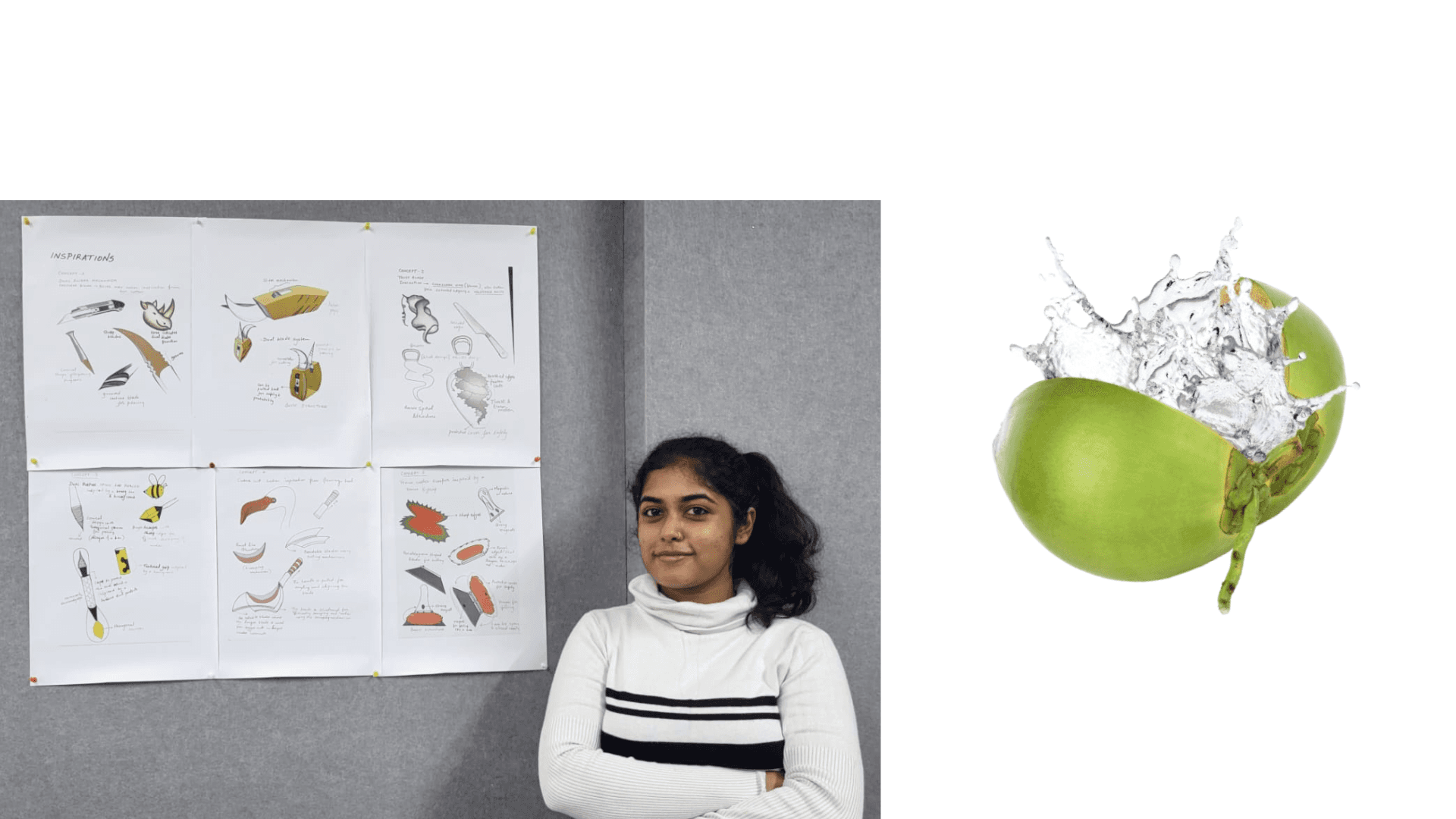
This project started as a group effort with five members, where we conducted research and field studies together. Later, each of us redesigned our own individual tools based on the collective findings.
The Problem
Coconut vendors face significant safety risks and physical strain due to inefficient, outdated tools for cutting and piercing coconuts. These challenges impact their productivity and well-being, necessitating a safer, more ergonomic solution.
The Goal
The goal is to design an ergonomic tool that focuses on safely and efficiently cutting the top of coconuts while integrating piercing functionality to enhance convenience for vendors.

User research
We conducted interviews with coconut vendors to understand their daily challenges, focusing on safety and efficiency while handling coconuts. Additionally, secondary research from reliable online sources provided insights into existing tools, their limitations, and user needs. This combined approach helped identify key pain points and opportunities for a safer, more effective tool design.
Pain Points
Vendors face a high risk of injuries due to the use of unsafe and poorly designed tools, which lack proper safety features.
Repetitive cutting motions with traditional tools cause significant physical strain, especially on the hands and wrists.
Using separate tools for cutting and piercing slows down the process, reducing efficiency and increasing effort.
Maintaining the sharpness and durability of current tools is challenging, leading to frequent replacements and additional costs.
User Persona

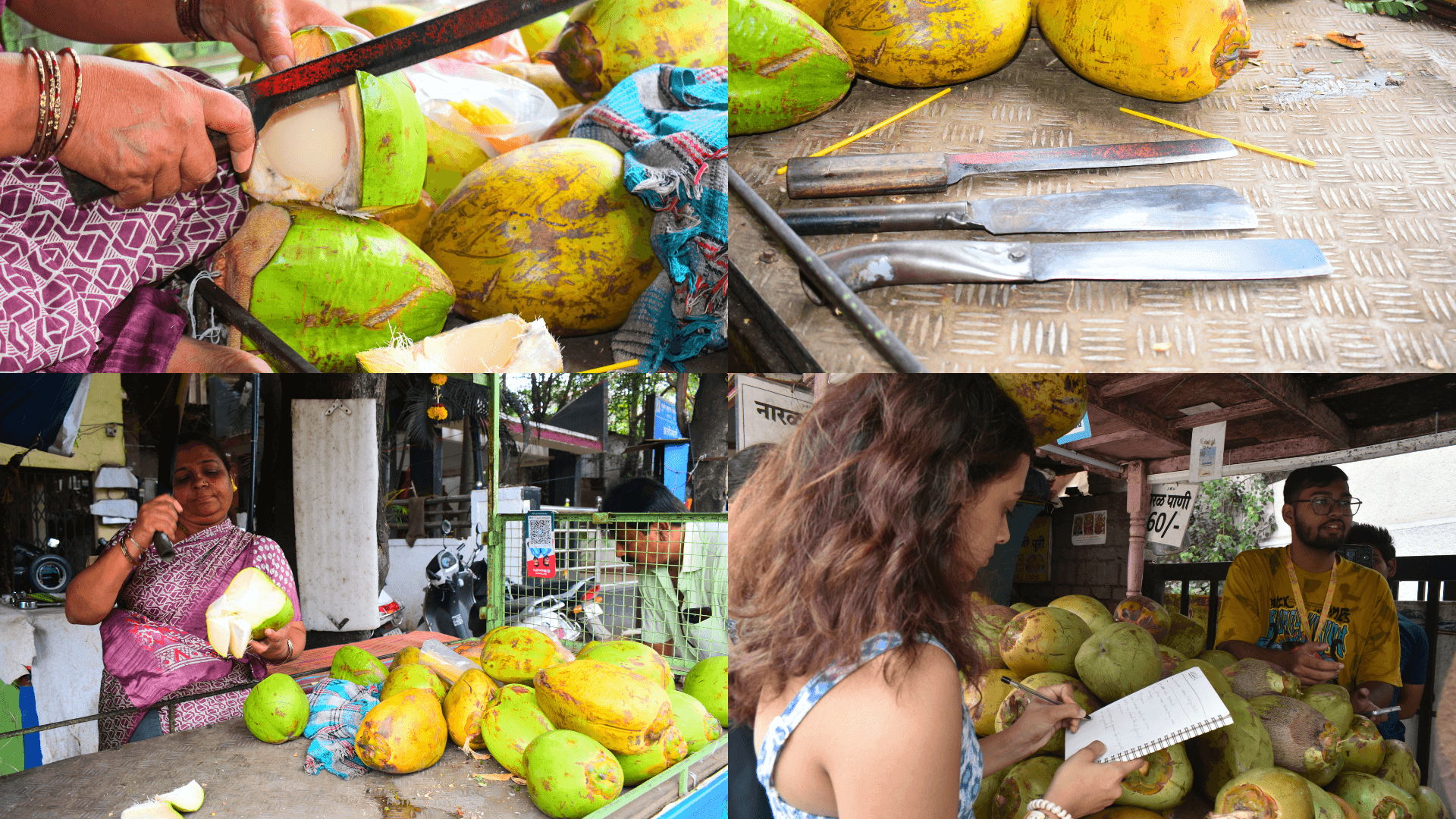
We conducted a field study with coconut vendors to understand their challenges and gather insights directly from their work environment.
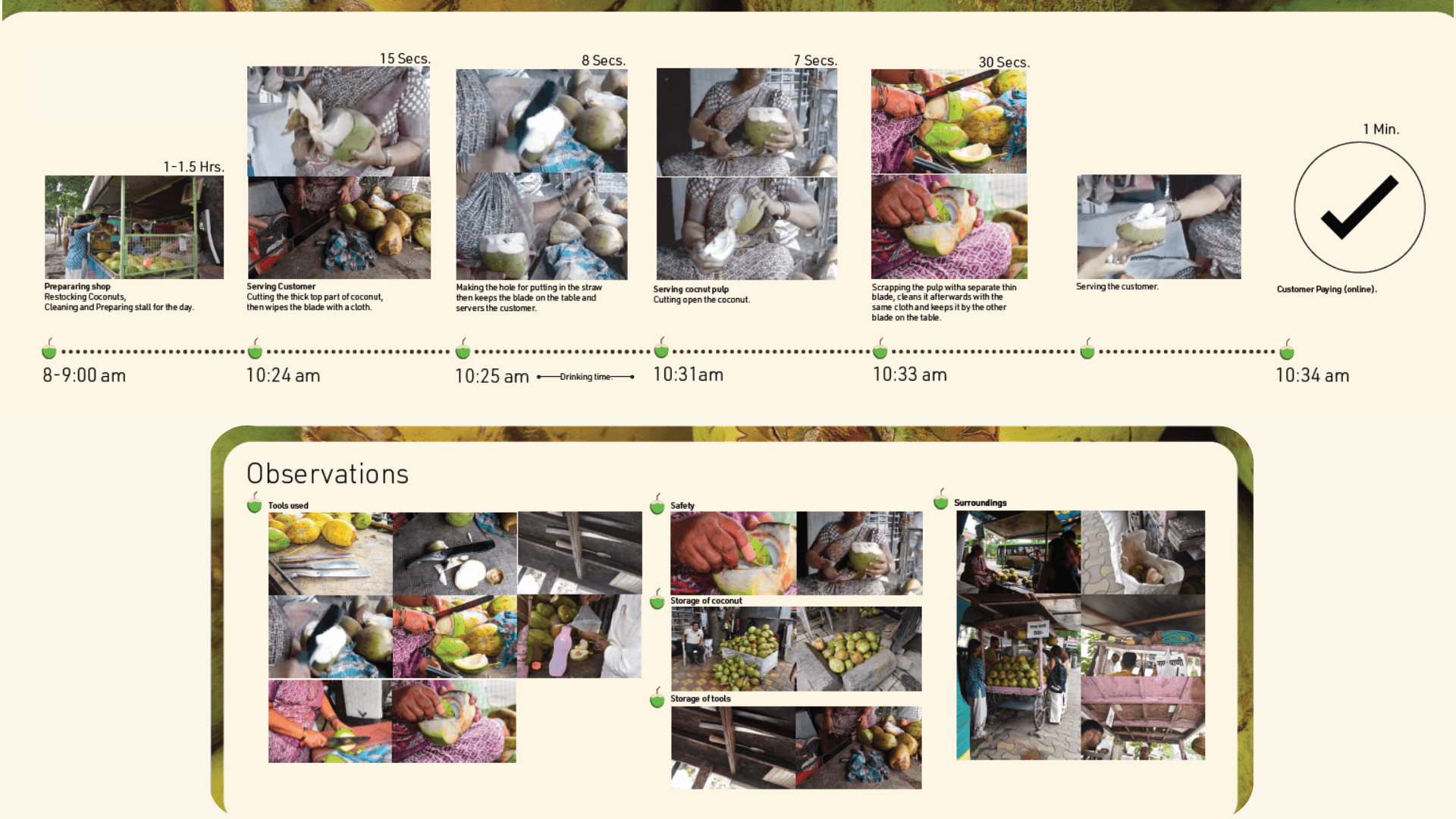
Activity Mapping
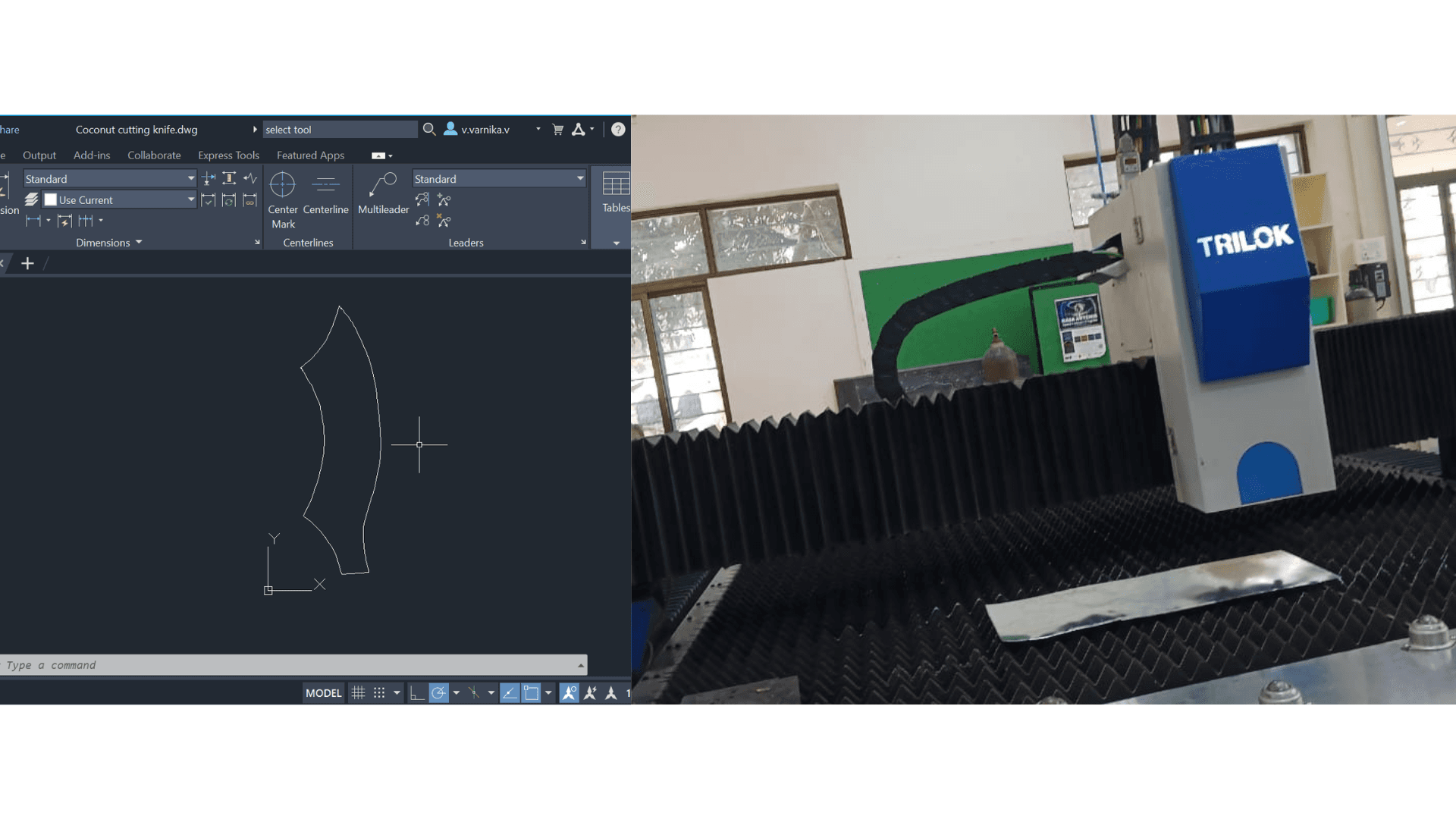
Making blade of the knife using Autocad, later used for lazer cutting
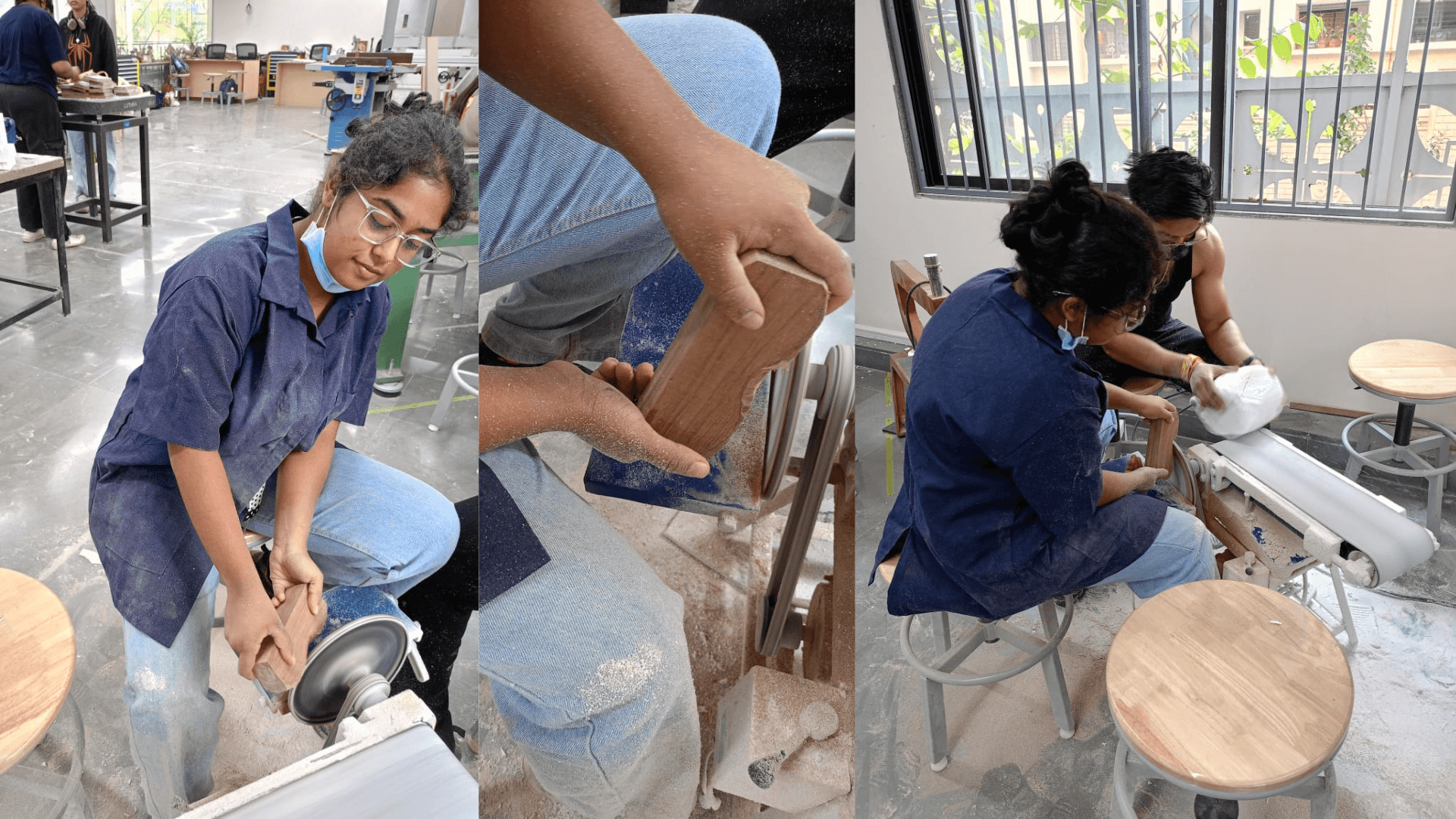
Later, I used woodworking in the design process to create a more hands-on, real-world element for the knife handles, improving both its function and look.
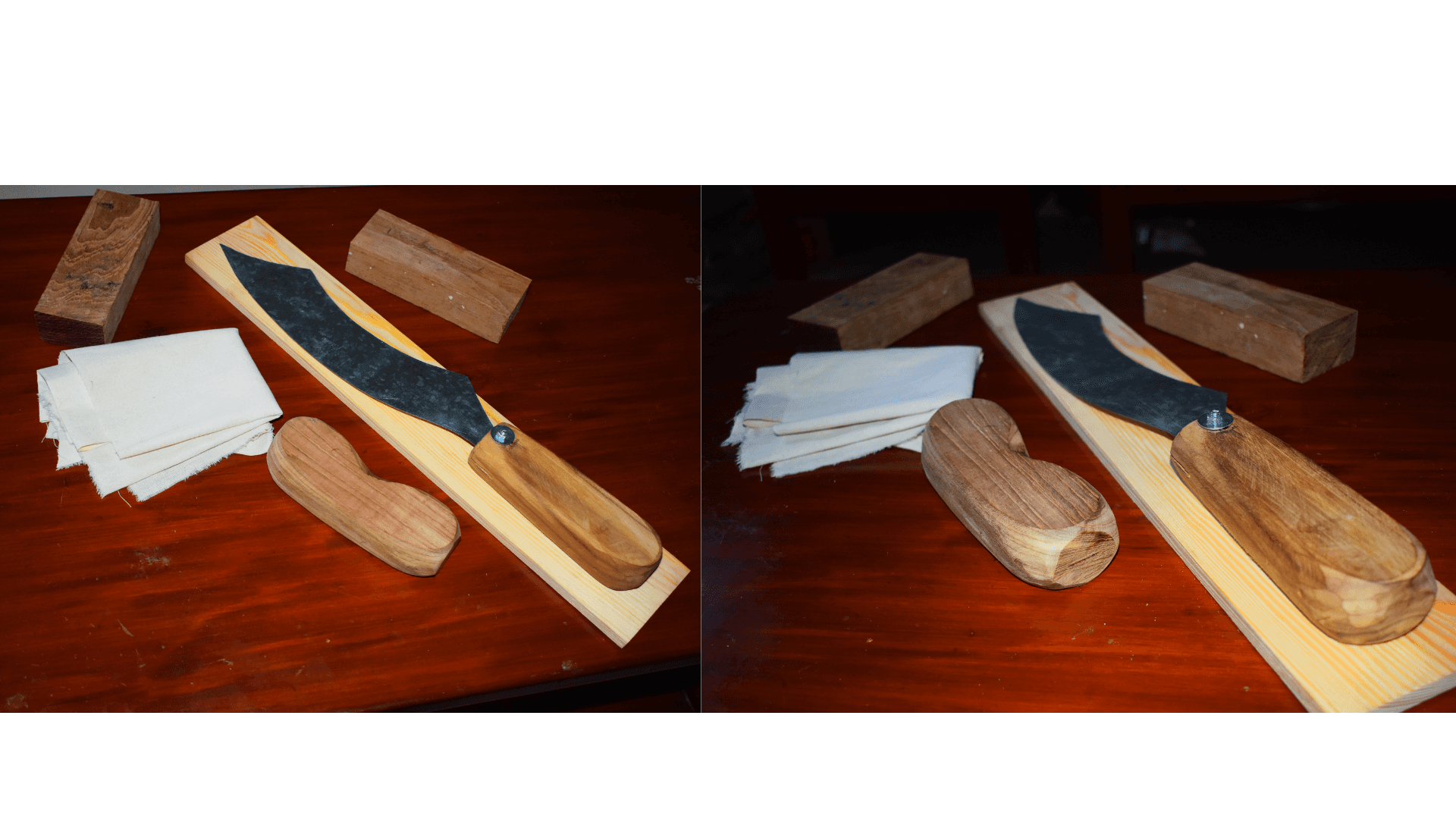
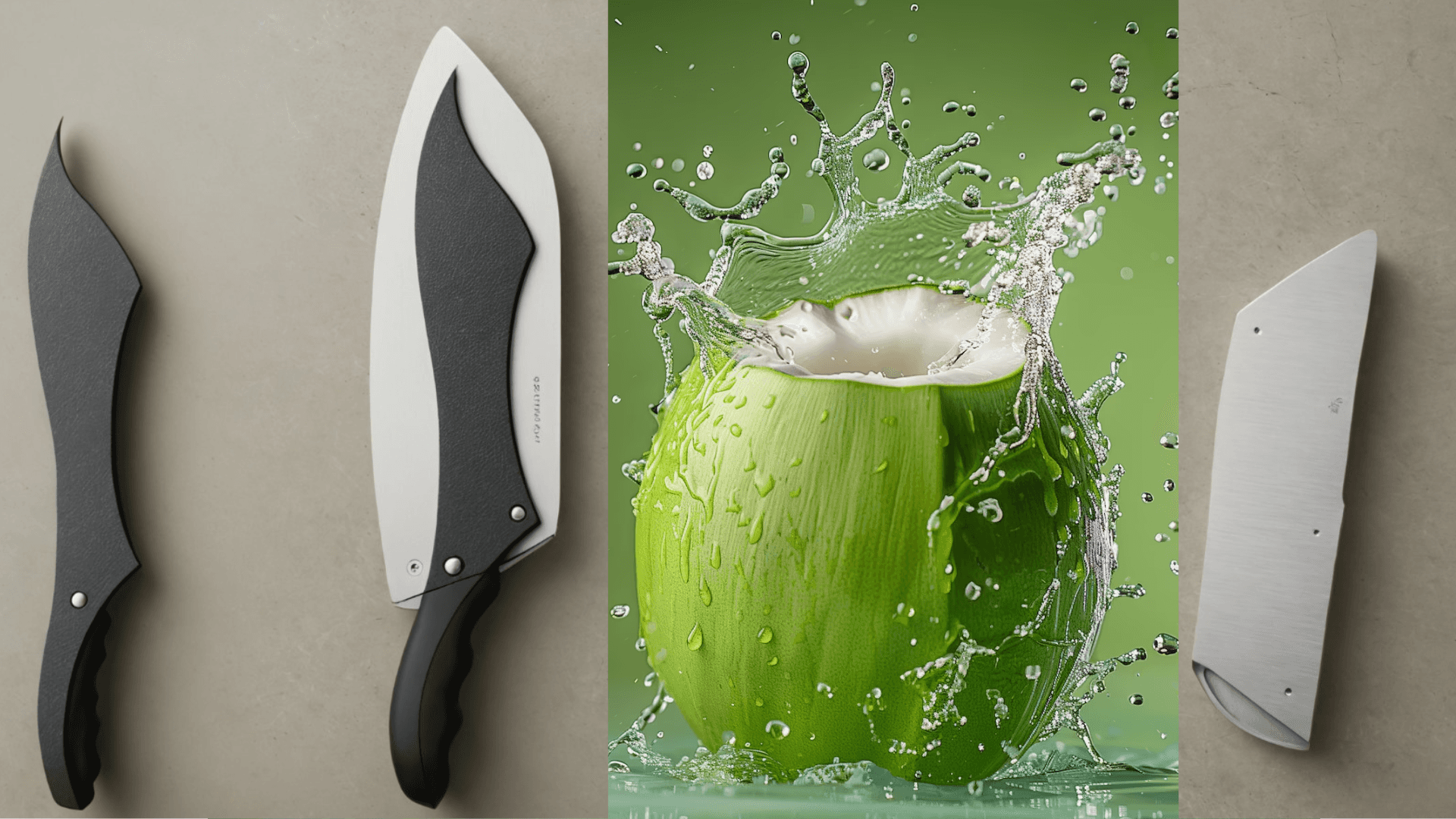
The sleek, modern design with smooth curves and an ergonomic handle offers both style and comfort. The curved blade ensures smooth cutting and piercing, while the sharp edge provides precision. The non-slip handle and safety cap minimize risks, and the ergonomic design reduces strain for long-term use. This tool blends aesthetics, functionality, and safety, making it ideal for coconut vendors or everyday use.

Question about my work?
Clean Split
CleanSplit: Effortless Coconut Handling
6 weeks
Project overview
This project focuses on designing an innovative tool to address the health and safety challenges faced by coconut vendors. By integrating cutting and piercing functions into a single ergonomic design, the tool aims to enhance efficiency, reduce physical strain, and improve overall safety. Through user-centered research and sustainable design practices, the project seeks to redefine the daily working experience of coconut vendors, providing them with a reliable and multifunctional solution.
This project started as a group effort with five members, where we conducted research and field studies together. Later, each of us redesigned our own individual tools based on the collective findings.
The Problem
Coconut vendors face significant safety risks and physical strain due to inefficient, outdated tools for cutting and piercing coconuts. These challenges impact their productivity and well-being, necessitating a safer, more ergonomic solution.
The Goal
The goal is to design an ergonomic tool that focuses on safely and efficiently cutting the top of coconuts while integrating piercing functionality to enhance convenience for vendors.
User research
We conducted interviews with coconut vendors to understand their daily challenges, focusing on safety and efficiency while handling coconuts. Additionally, secondary research from reliable online sources provided insights into existing tools, their limitations, and user needs. This combined approach helped identify key pain points and opportunities for a safer, more effective tool design.
Pain Points
Vendors face a high risk of injuries due to the use of unsafe and poorly designed tools, which lack proper safety features.
Repetitive cutting motions with traditional tools cause significant physical strain, especially on the hands and wrists.
Using separate tools for cutting and piercing slows down the process, reducing efficiency and increasing effort.
Maintaining the sharpness and durability of current tools is challenging, leading to frequent replacements and additional costs.
User Persona
We conducted a field study with coconut vendors to understand their challenges and gather insights directly from their work environment.
Activity Mapping
Making blade of the knife using Autocad, later used for lazer cutting
Later, I used woodworking in the design process to create a more hands-on, real-world element for the knife handles, improving both its function and look.
The sleek, modern design with smooth curves and an ergonomic handle offers both style and comfort. The curved blade ensures smooth cutting and piercing, while the sharp edge provides precision. The non-slip handle and safety cap minimize risks, and the ergonomic design reduces strain for long-term use. This tool blends aesthetics, functionality, and safety, making it ideal for coconut vendors or everyday use.
Question about my work?
Clean Split
CleanSplit: Effortless Coconut Handling
6 weeks
Project overview
This project focuses on designing an innovative tool to address the health and safety challenges faced by coconut vendors. By integrating cutting and piercing functions into a single ergonomic design, the tool aims to enhance efficiency, reduce physical strain, and improve overall safety. Through user-centered research and sustainable design practices, the project seeks to redefine the daily working experience of coconut vendors, providing them with a reliable and multifunctional solution.
This project started as a group effort with five members, where we conducted research and field studies together. Later, each of us redesigned our own individual tools based on the collective findings.
The Problem
Coconut vendors face significant safety risks and physical strain due to inefficient, outdated tools for cutting and piercing coconuts. These challenges impact their productivity and well-being, necessitating a safer, more ergonomic solution.
The Goal
The goal is to design an ergonomic tool that focuses on safely and efficiently cutting the top of coconuts while integrating piercing functionality to enhance convenience for vendors.
User research
We conducted interviews with coconut vendors to understand their daily challenges, focusing on safety and efficiency while handling coconuts. Additionally, secondary research from reliable online sources provided insights into existing tools, their limitations, and user needs. This combined approach helped identify key pain points and opportunities for a safer, more effective tool design.
Pain Points
Vendors face a high risk of injuries due to the use of unsafe and poorly designed tools, which lack proper safety features.
Repetitive cutting motions with traditional tools cause significant physical strain, especially on the hands and wrists.
Using separate tools for cutting and piercing slows down the process, reducing efficiency and increasing effort.
Maintaining the sharpness and durability of current tools is challenging, leading to frequent replacements and additional costs.
User Persona
We conducted a field study with coconut vendors to understand their challenges and gather insights directly from their work environment.
Activity Mapping
Making blade of the knife using Autocad, later used for lazer cutting
Later, I used woodworking in the design process to create a more hands-on, real-world element for the knife handles, improving both its function and look.
The sleek, modern design with smooth curves and an ergonomic handle offers both style and comfort. The curved blade ensures smooth cutting and piercing, while the sharp edge provides precision. The non-slip handle and safety cap minimize risks, and the ergonomic design reduces strain for long-term use. This tool blends aesthetics, functionality, and safety, making it ideal for coconut vendors or everyday use.