
Smart system for passengers Part 1
A Smart Information System for PMPML Passengers
4 weeks
For our group project on PMPML buses, we worked on understanding and improving the travel experience. In our team of five, my role was to identify problems and find solutions. I focused on understanding the issues passengers face and helped come up with ideas to make bus travel easier and better.
Problem
Many passengers struggle to access essential bus and route information due to literacy barriers, disabilities, or unfamiliarity with the system, leading to confusion and inconvenience.
Goal
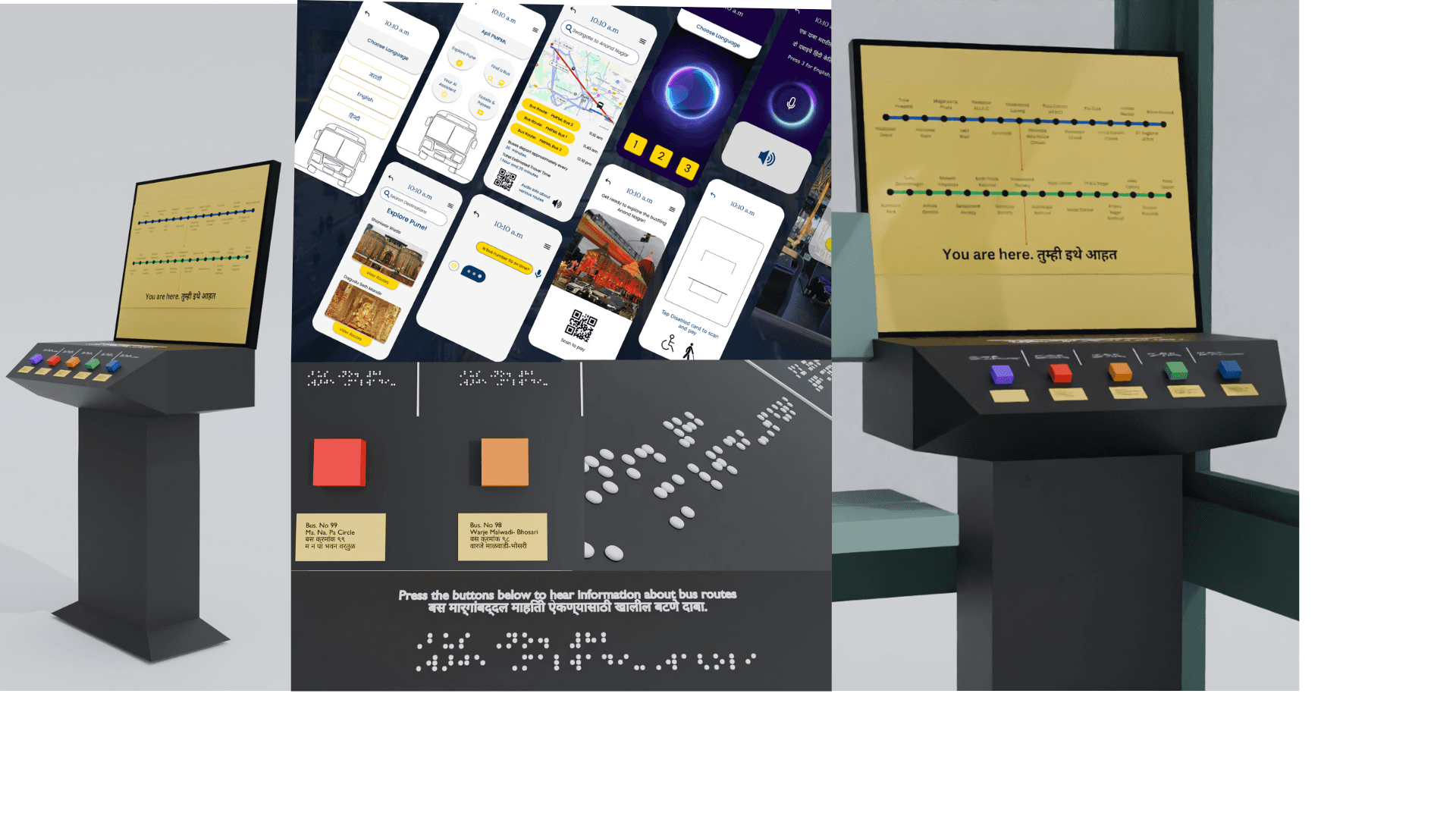
Designing a device that provides informational content about PMPML buses and routes, making travel easier for illiterate, differently-abled, and new passengers.

Economical Slide
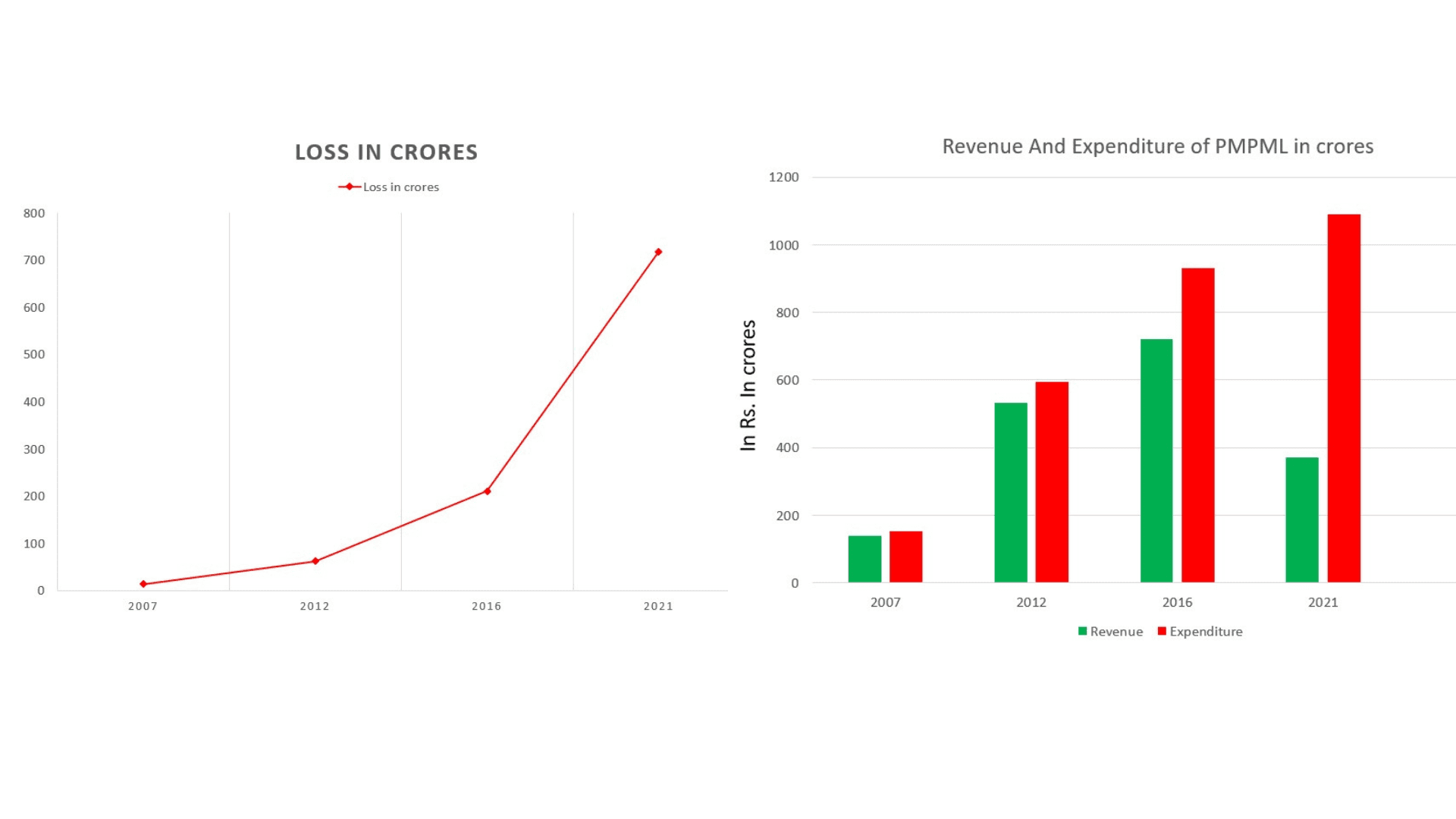
PMPML’s yearly revenue and expenditure from 2007 (merger year), 2012, 2016, and 2021 show increasing losses. Operational deficits have led to disputes between PMT and PCMT, which share 60% and 40% of the losses. In FY 2021-22, revenue was ₹372 Cr, expenditure ₹937 Cr, and after reimbursements from PMC and PCMC (₹529 Cr), the net loss stood at ₹157 Cr.
Analysis of Infrastructure
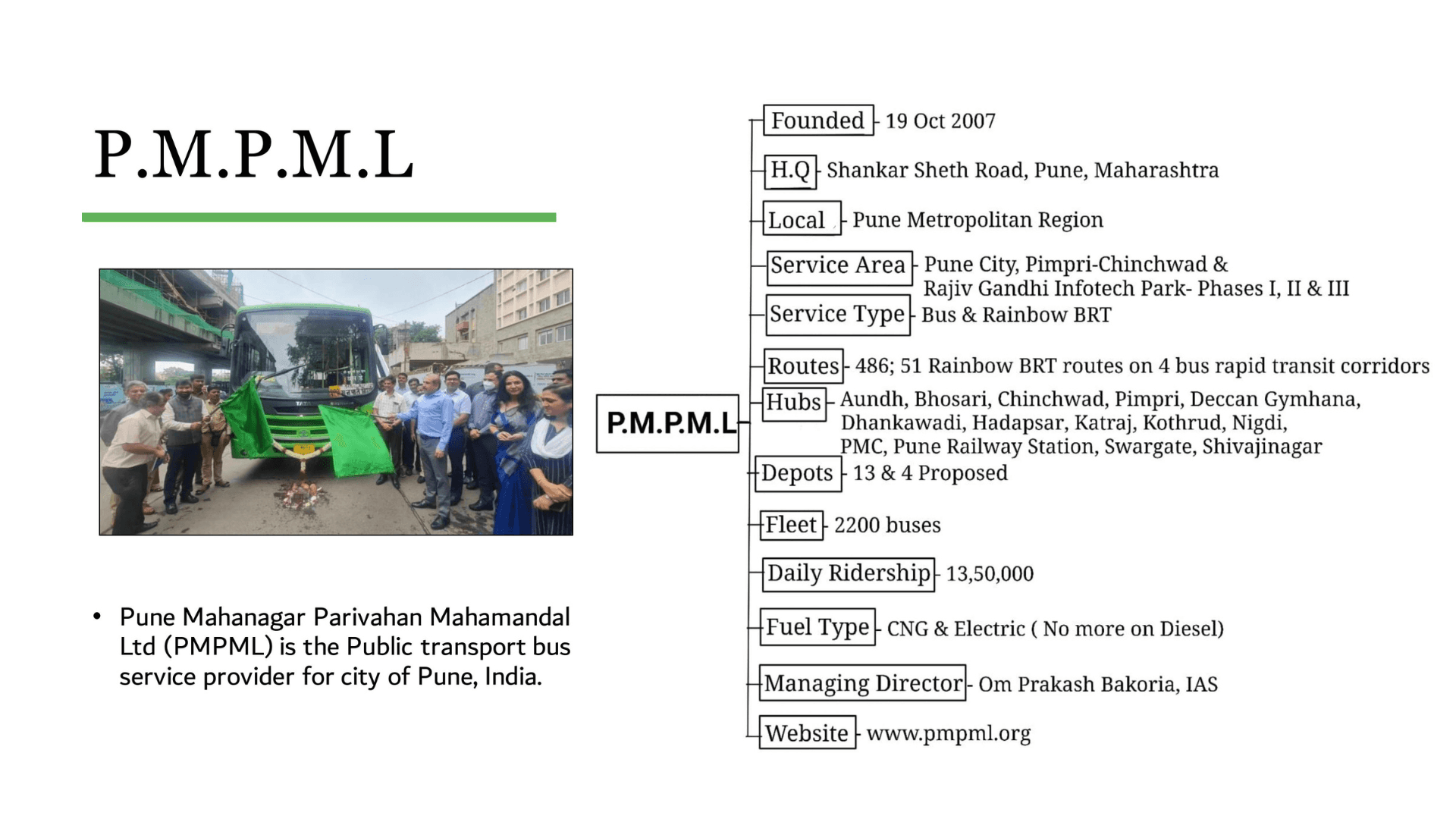
PMPML buses carry an average of 1,394,565 passengers daily, about 860 per bus, with numbers rising annually. Many buses go off-road due to maintenance issues, breakdowns, and insufficient manpower and facilities at depots. Privately owned buses also suffer from poor upkeep. A significant portion of the fleet is over 15 years old, making breakdowns frequent. The shortage of buses leads to severe overcrowding, with peak-hour loads reaching three times the capacity (30 seated, 20 standing).
Safety/ Accidents
In 2015, lack of bus depots forced nearly half of PMPML buses to be parked on streets, worsening traffic congestion. A CIRT report (2016-17) stated PMPML needed 18 depots but had only 13. Bus shelters were criticized for poor condition, lack of seating, and missing information.
Safety concerns grew in 2017-18 as 16 buses caught fire in 15 months. An RTI revealed PMPML had just 124 fire extinguishers, with most buses lacking them or a fire safety audit. PMPML cited frequent theft of extinguishers as a challenge.
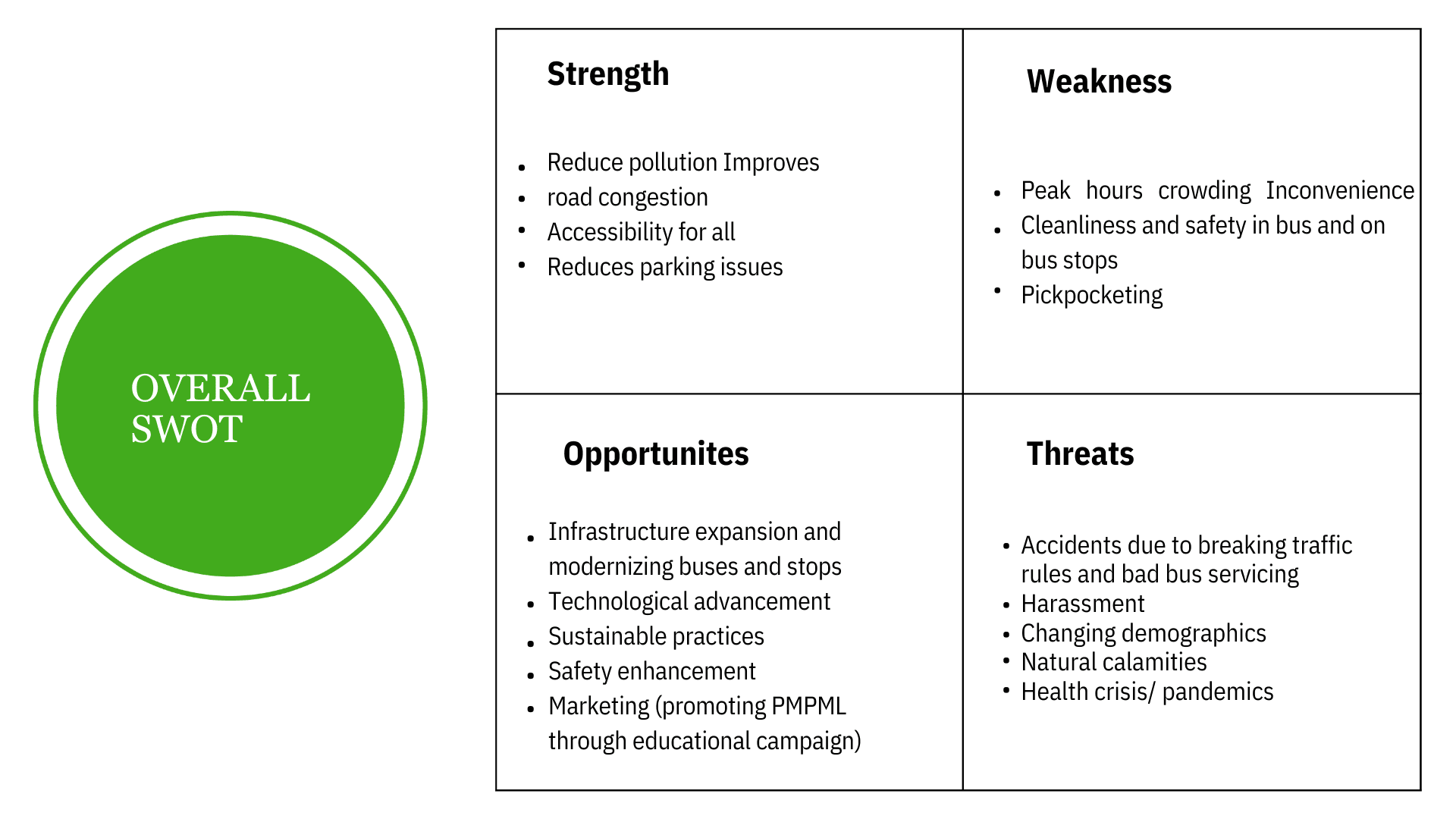
Based on our primary research, we collected data
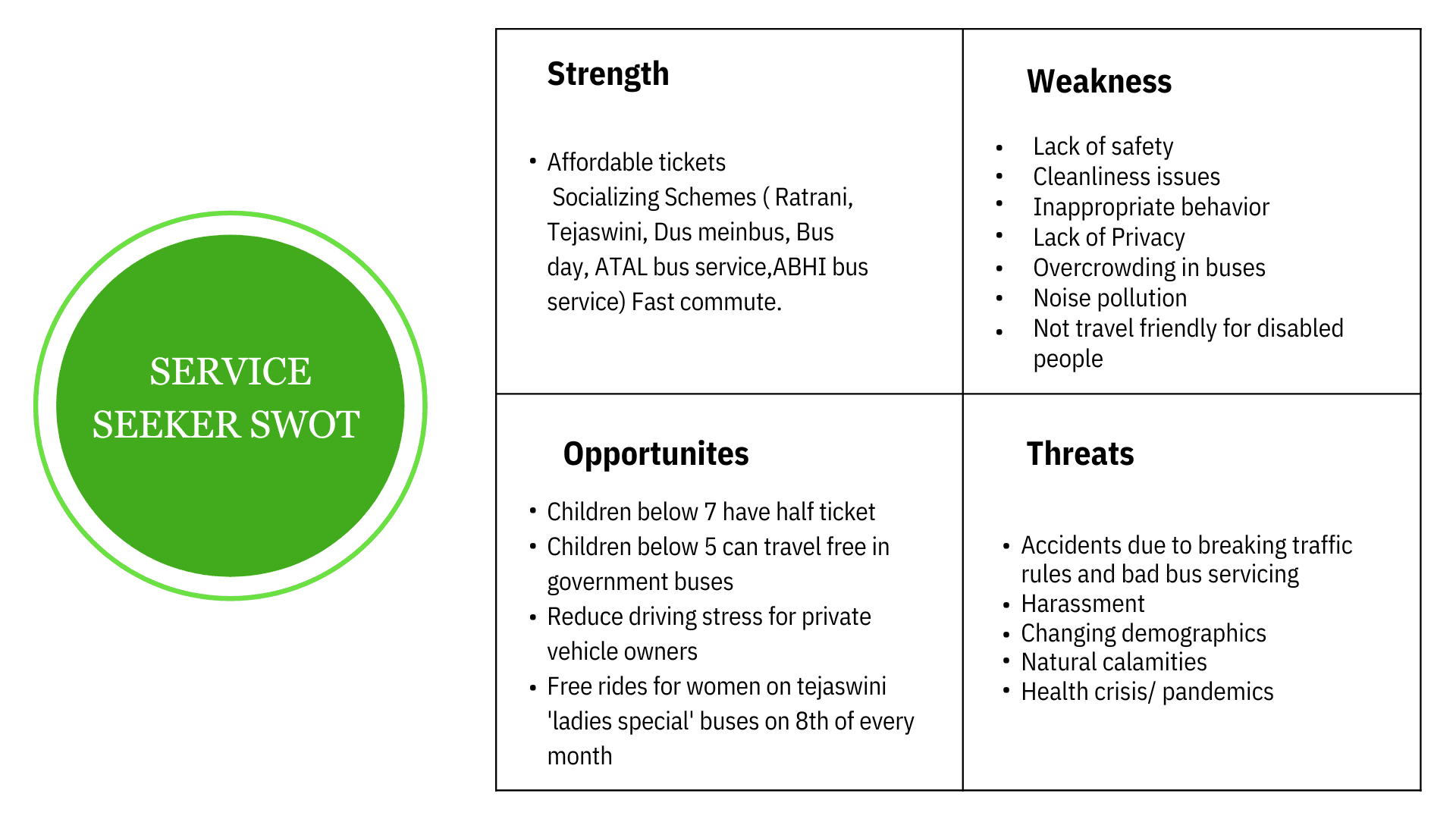
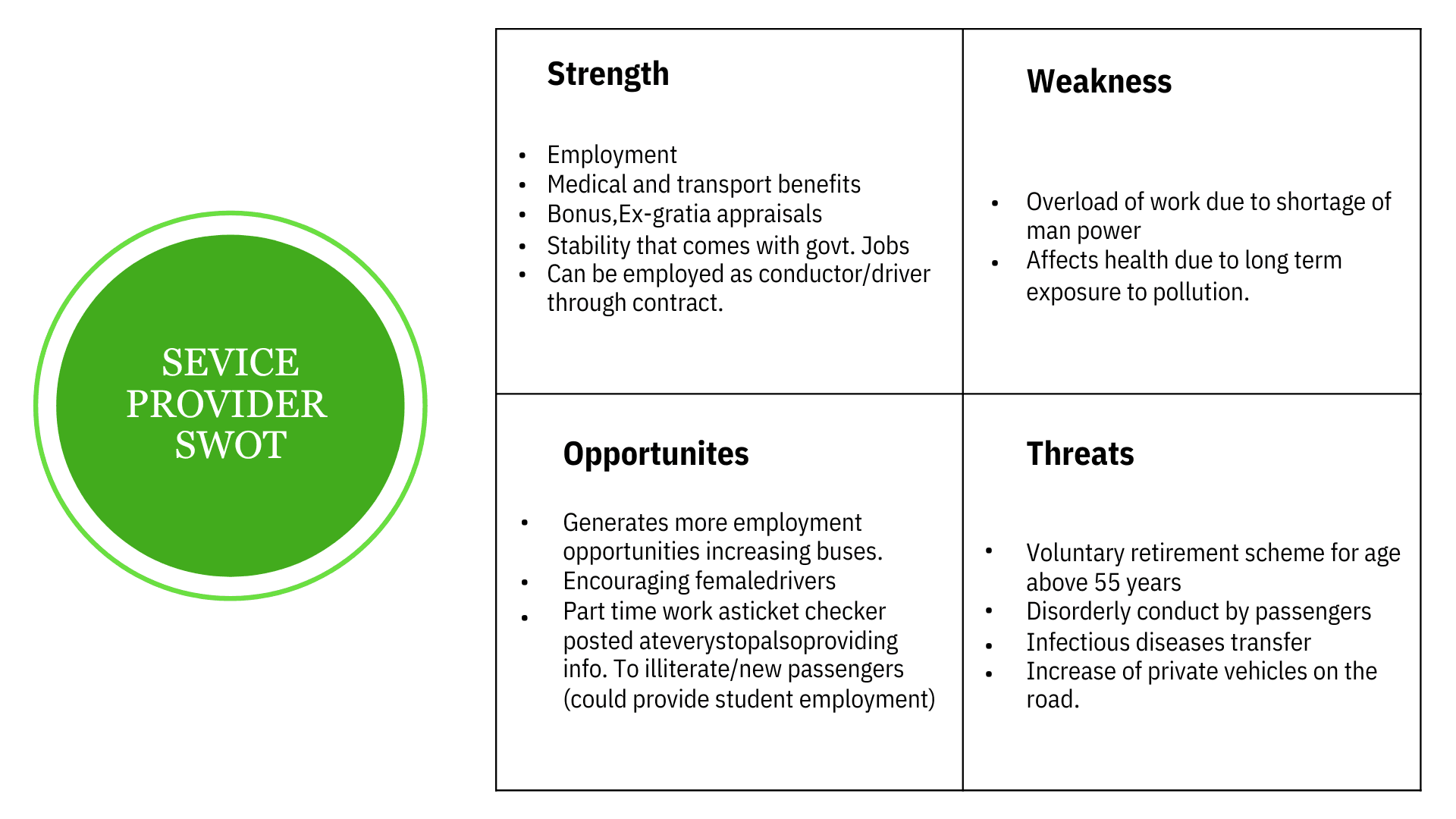
Common complaints by passengers
Buses not halting at stations is the most common complaint.
Rude behavior and rash driving by drivers and conductors.
Senior citizens complain about conductors not returning remaining fare.
Reports of indecent behavior by conductors towards women.
Reserved seats for women often occupied by men.
Human errors reported, e.g., conductors forgetting to issue tickets, resulting in fines.
PMPML rewards commuters ₹100 for filing complaints with evidence about errant staff.
Salary deductions for staff found at fault.


Question about my work?
Smart system for passengers Part 1
A Smart Information System for PMPML Passengers
4 weeks
For our group project on PMPML buses, we worked on understanding and improving the travel experience. In our team of five, my role was to identify problems and find solutions. I focused on understanding the issues passengers face and helped come up with ideas to make bus travel easier and better.
Problem
Many passengers struggle to access essential bus and route information due to literacy barriers, disabilities, or unfamiliarity with the system, leading to confusion and inconvenience.
Goal
Designing a device that provides informational content about PMPML buses and routes, making travel easier for illiterate, differently-abled, and new passengers.
Economical Slide
PMPML’s yearly revenue and expenditure from 2007 (merger year), 2012, 2016, and 2021 show increasing losses. Operational deficits have led to disputes between PMT and PCMT, which share 60% and 40% of the losses. In FY 2021-22, revenue was ₹372 Cr, expenditure ₹937 Cr, and after reimbursements from PMC and PCMC (₹529 Cr), the net loss stood at ₹157 Cr.
Analysis of Infrastructure
PMPML buses carry an average of 1,394,565 passengers daily, about 860 per bus, with numbers rising annually. Many buses go off-road due to maintenance issues, breakdowns, and insufficient manpower and facilities at depots. Privately owned buses also suffer from poor upkeep. A significant portion of the fleet is over 15 years old, making breakdowns frequent. The shortage of buses leads to severe overcrowding, with peak-hour loads reaching three times the capacity (30 seated, 20 standing).
Safety/ Accidents
In 2015, lack of bus depots forced nearly half of PMPML buses to be parked on streets, worsening traffic congestion. A CIRT report (2016-17) stated PMPML needed 18 depots but had only 13. Bus shelters were criticized for poor condition, lack of seating, and missing information.
Safety concerns grew in 2017-18 as 16 buses caught fire in 15 months. An RTI revealed PMPML had just 124 fire extinguishers, with most buses lacking them or a fire safety audit. PMPML cited frequent theft of extinguishers as a challenge.
Based on our primary research, we collected data
Common complaints by passengers
Buses not halting at stations is the most common complaint.
Rude behavior and rash driving by drivers and conductors.
Senior citizens complain about conductors not returning remaining fare.
Reports of indecent behavior by conductors towards women.
Reserved seats for women often occupied by men.
Human errors reported, e.g., conductors forgetting to issue tickets, resulting in fines.
PMPML rewards commuters ₹100 for filing complaints with evidence about errant staff.
Salary deductions for staff found at fault.
Question about my work?
Smart system for passengers Part 1
A Smart Information System for PMPML Passengers
4 weeks
For our group project on PMPML buses, we worked on understanding and improving the travel experience. In our team of five, my role was to identify problems and find solutions. I focused on understanding the issues passengers face and helped come up with ideas to make bus travel easier and better.
Problem
Many passengers struggle to access essential bus and route information due to literacy barriers, disabilities, or unfamiliarity with the system, leading to confusion and inconvenience.
Goal
Designing a device that provides informational content about PMPML buses and routes, making travel easier for illiterate, differently-abled, and new passengers.
Economical Slide
PMPML’s yearly revenue and expenditure from 2007 (merger year), 2012, 2016, and 2021 show increasing losses. Operational deficits have led to disputes between PMT and PCMT, which share 60% and 40% of the losses. In FY 2021-22, revenue was ₹372 Cr, expenditure ₹937 Cr, and after reimbursements from PMC and PCMC (₹529 Cr), the net loss stood at ₹157 Cr.
Analysis of Infrastructure
PMPML buses carry an average of 1,394,565 passengers daily, about 860 per bus, with numbers rising annually. Many buses go off-road due to maintenance issues, breakdowns, and insufficient manpower and facilities at depots. Privately owned buses also suffer from poor upkeep. A significant portion of the fleet is over 15 years old, making breakdowns frequent. The shortage of buses leads to severe overcrowding, with peak-hour loads reaching three times the capacity (30 seated, 20 standing).
Safety/ Accidents
In 2015, lack of bus depots forced nearly half of PMPML buses to be parked on streets, worsening traffic congestion. A CIRT report (2016-17) stated PMPML needed 18 depots but had only 13. Bus shelters were criticized for poor condition, lack of seating, and missing information.
Safety concerns grew in 2017-18 as 16 buses caught fire in 15 months. An RTI revealed PMPML had just 124 fire extinguishers, with most buses lacking them or a fire safety audit. PMPML cited frequent theft of extinguishers as a challenge.
Based on our primary research, we collected data
Common complaints by passengers
Buses not halting at stations is the most common complaint.
Rude behavior and rash driving by drivers and conductors.
Senior citizens complain about conductors not returning remaining fare.
Reports of indecent behavior by conductors towards women.
Reserved seats for women often occupied by men.
Human errors reported, e.g., conductors forgetting to issue tickets, resulting in fines.
PMPML rewards commuters ₹100 for filing complaints with evidence about errant staff.
Salary deductions for staff found at fault.